A nest box is a simple but brilliant way to support birds in UK gardens, especially as natural nesting sites like tree holes and old buildings become harder to find. Different bird species prefer different types of nest boxes, so choosing the right design and entrance hole size can help attract particular birds. For example, small entrance holes are ideal for species such as blue tits and great tits, while open-fronted boxes are often used by robins and wrens.
You should try and put them in a quiet, sheltered spot away from strong sunlight, prevailing wind, and predators. Mounting them at least 1.5–3 metres above the ground and facing between north and east can help provide the best conditions for nesting birds. By installing nest boxes in your garden, you can provide safe places for birds to raise their young while enjoying the chance to observe their fascinating behaviour throughout the breeding season.
Below is a guide to different types of nest boxes to help to choose the right ones for your garden. We have a variety of bird boxes around the garden and love its makes us so happy when we see all the birds using them.
This post may contain affiliate links. If you buy through these links we may earn a small commission at no extra cost to you.
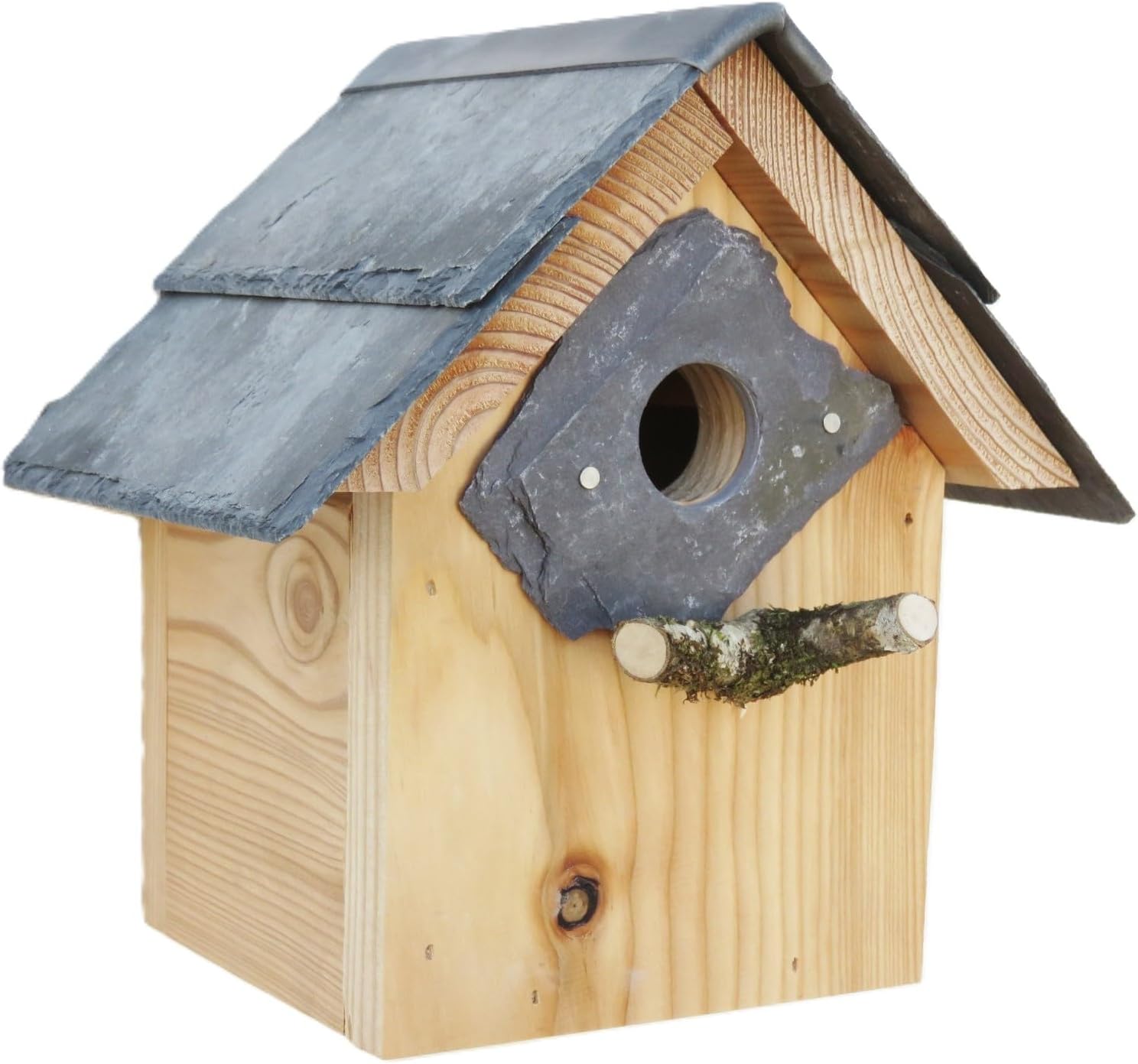
Small Hole Nest Boxes
These are the most common nest boxes. They have a small circular entrance hole that protects nesting birds from larger species and predators.
A nest box with a 32mm entrance hole is one of the most versatile options for UK gardens, as it suits several medium-sized cavity-nesting birds. The slightly larger entrance allows species that are too big for smaller 25mm or 28mm holes to access the box while still offering some protection from larger predators. Birds that may use a 32mm hole nest box include great tits, house sparrows, nuthatches, tree sparrows, and occasionally pied flycatchers in suitable areas. In some gardens, coal tits or blue tits may also use these boxes if smaller options are not available.
These nest boxes should be mounted about 2–4 metres above the ground on a tree, wall, or fence in a quiet area of the garden, ideally facing between north and east to avoid strong sunlight and prevailing winds. Providing a 32mm nest box can help attract a variety of breeding birds and offer them a safe place to raise their young each spring.
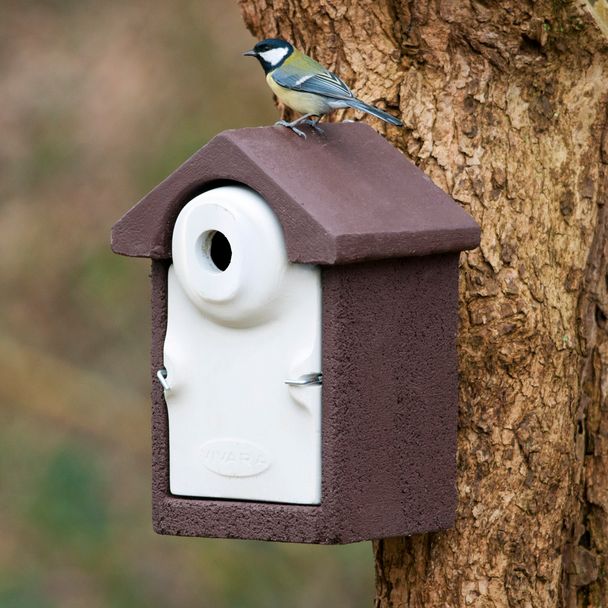
Woodcrete Bird Box
Woodcrete bird boxes are a durable and long-lasting alternative to traditional wooden nest boxes. Made from a mixture of wood fibres and concrete, this material creates a strong, breathable structure that provides excellent insulation for nesting birds. Woodcrete boxes help keep nests cooler in summer and warmer in colder weather, creating a more stable environment for eggs and chicks. They are also highly resistant to rot, weather damage, and predators, meaning they can last for many years with very little maintenance. Because of their natural texture and durability, woodcrete nest boxes are widely used by conservation organisations and are an excellent choice for supporting birds in UK gardens.
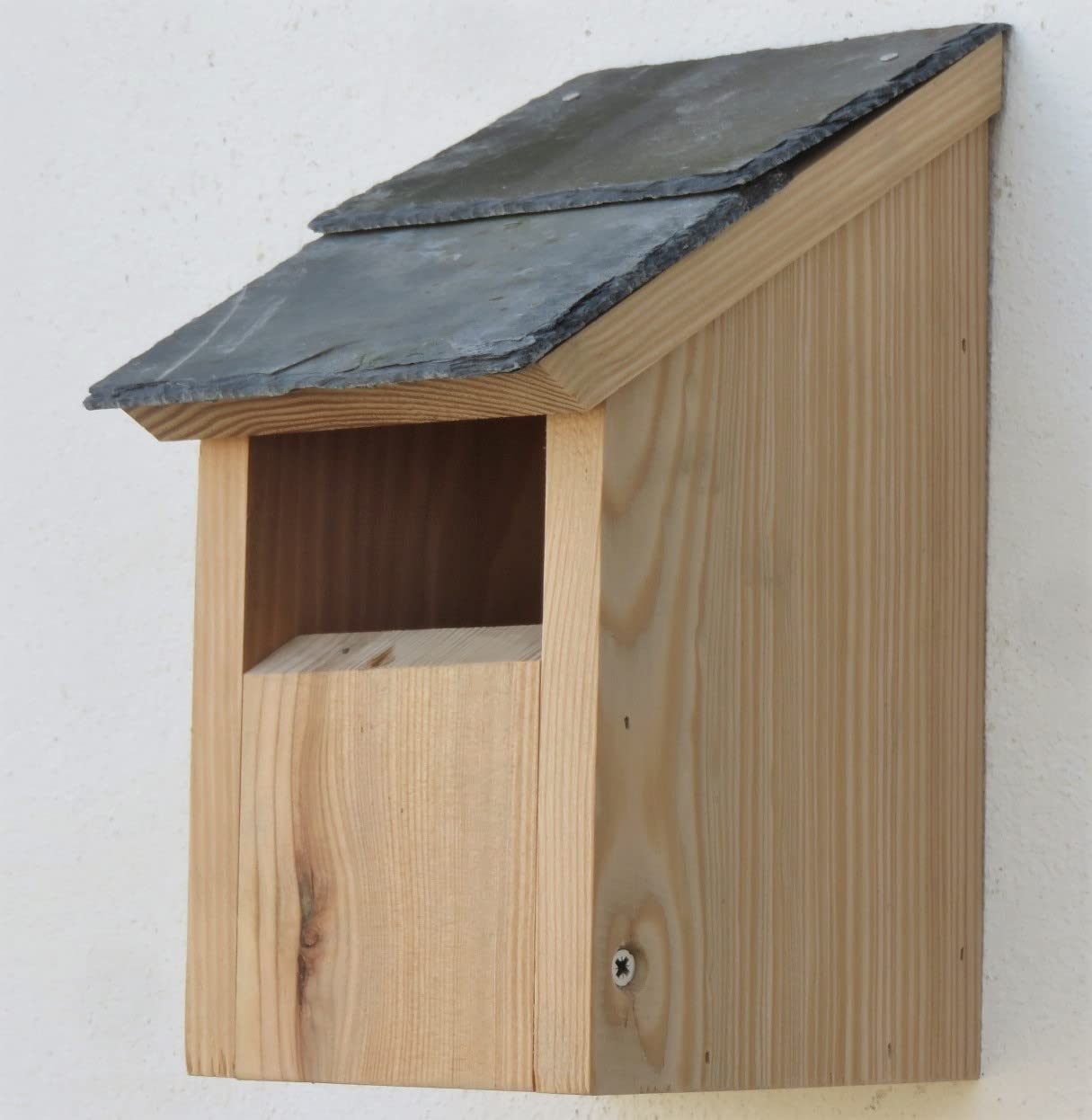
Open Front Bird Box
Open-fronted boxes are designed for birds that prefer more accessible nesting sites rather than enclosed holes.
They are commonly used by:
- Robins
- Wrens
- Pied wagtails
- Spotted flycatchers
These boxes should be placed low down (around 1–2 metres) in a quiet, well-hidden spot, it really needs to be somewhere nestled in shrubs or bushes. We have found these boxes to be a favourite with robins.
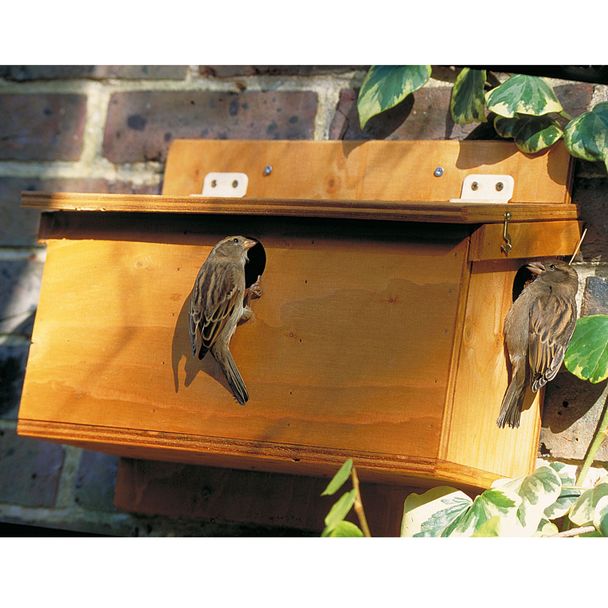
Sparrow Terrace Nest Boxes
Sparrow terrace nest boxes are specially designed to suit the nesting habits of house sparrows, which naturally prefer to nest in small colonies. Instead of a single nesting space, a sparrow terrace contains several separate compartments in one long box, allowing multiple pairs of sparrows to nest close together. These boxes mimic the spaces sparrows once found under roof tiles and in the eaves of older buildings.
Sparrow terraces are best installed high up on a wall, usually at least 2–3 metres above the ground, and in a quiet spot where the birds feel safe. Because house sparrow numbers have declined in many areas, providing a sparrow terrace can be a great way to encourage these sociable little birds to nest in your garden and help support their populations.
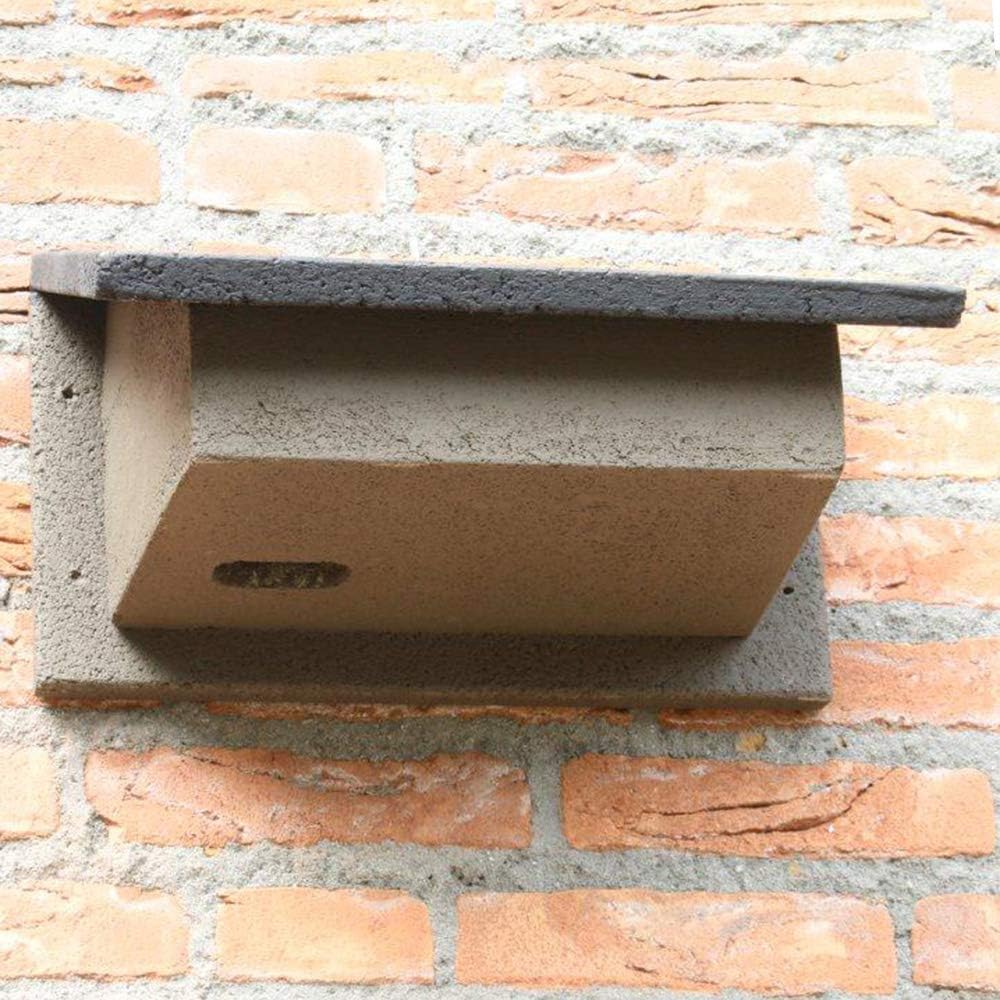
Swift Boxes
Swift boxes are specially designed nest boxes created to support swifts, remarkable migratory birds that spend most of their lives in the air. In the UK, swifts traditionally nest in small gaps under roof tiles and within older buildings, but modern construction and renovations have greatly reduced these natural nesting spaces. Swift boxes provide a safe alternative by recreating the narrow cavities these birds prefer for breeding.
Unlike many garden birds, swifts need to nest high on buildings, usually at least 5 metres above the ground, with a clear flight path so they can swoop directly into the entrance. Swift boxes are typically installed under the eaves of houses or high on walls and may be used by returning birds year after year once a colony becomes established.
By installing swift boxes, you can play an important role in helping these declining birds find safe nesting sites and continue their incredible summer visits to UK towns and gardens.
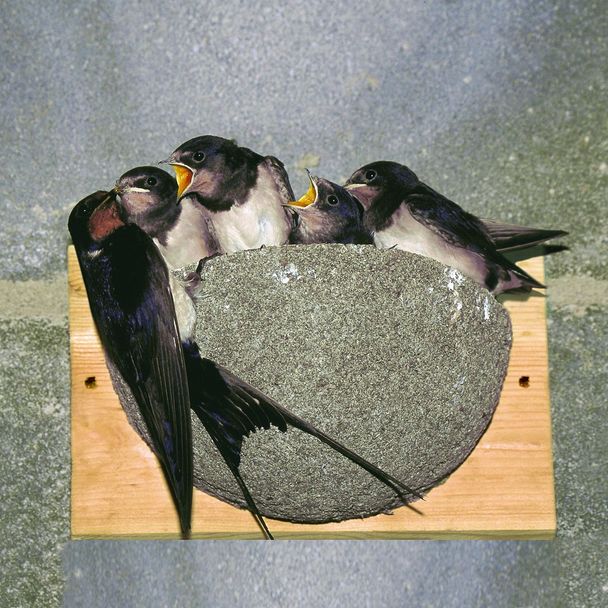
Swallow Cups
Swallow cups are specially designed nest supports that help house swallows build their nests in suitable places around buildings. In the wild, swallows create cup-shaped nests from mud and plant material, usually attached to sheltered ledges inside barns, sheds, garages, or under eaves. Artificial swallow cups mimic the shape of these natural nests, giving swallows a ready-made foundation that makes it easier for them to settle and begin breeding. They should be installed in quiet, sheltered locations with good access for the birds to fly in and out. Providing swallow cups can help encourage swallows to nest in safe areas and support these much-loved summer visitors as they raise their young.
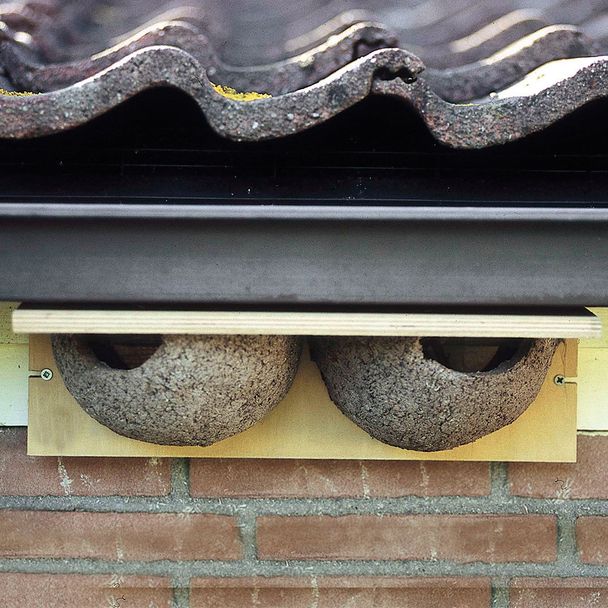
House Martin Cups
House martin cups are artificial nests designed to support house martins, which naturally build their nests from mud under the eaves of houses and buildings. These birds create dome-shaped nests attached high on walls, but modern buildings and dry weather can make it difficult for them to find suitable mud or surfaces to build on. Artificial house martin cups replicate the shape and structure of their natural nests, giving the birds a ready-made place to settle and breed. They are best installed high up under the eaves of a building, ideally in small groups since house martins prefer to nest in colonies. Providing house martin cups can help encourage these summer visitors to return each year and raise their chicks safely.
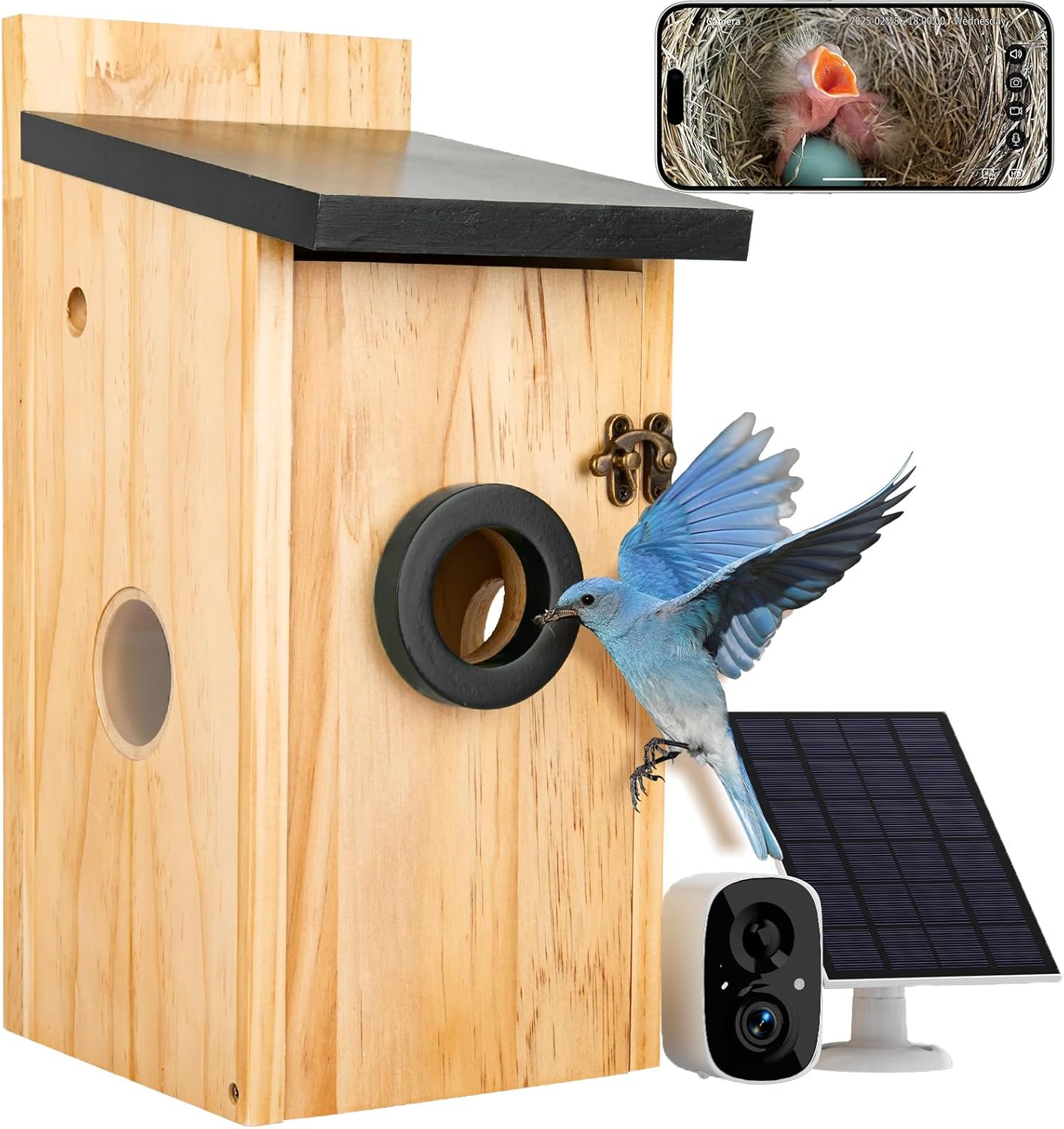
Camera Nest Box
Camera smart bird boxes are a excellent way to get a closer look at the secret lives of the birds in your garden. From the outside they look just like a normal nest box, but inside there is a small camera that lets you watch everything that happens inside the nest. Once birds move in, you can enjoy seeing them build their nest, lay eggs, feed their chicks, and eventually watch the young birds fledge. Many smart bird boxes connect to your phone or tablet, so you can check in whenever you like and even record special moments. It’s a fantastic way to learn more about garden birds and share the experience with family and friends, while still providing birds with a safe and comfortable place to raise their young.
We don’t have a camera bird box in our garden yet, but it’s something we would absolutely love to get. My parents have one, and it’s so exciting when a bird moves in and starts building a nest. Watching the eggs hatch and seeing the tiny chicks being fed is amazing, and you end up checking the camera all the time to see what’s happening. It’s such a brilliant way to see what really goes on inside a nest, and we can’t wait to have one in our own garden.
The camera linked below has everything we will be looking for, wireless, solar panel, all season weatherproof, the app and the built in SD card.